 Vyacheslav PysankaHead of SERM, Netpeak Ukraine







Vyacheslav Pysanka
SERM & SEO specialist
Head of SERM Department at Netpeak Ukraine · Kyiv
My name is Vyacheslav Pysanka. I work on what people see when they google your company — the discipline is called SERM, search engine reputation management. I head the SERM department at Netpeak Ukraine and I live and work in Kyiv.
I have been in digital since 2010. I started with my own online magazine, spent six years doing SEO for web studios and agency clients, ran the search function at a product company, and in 2024 joined Netpeak to build a reputation department from scratch. Along the way I have sat on both sides of the table: the vendor selling a result, and the client paying for it. That changes how you talk to people.
I work with businesses in Ukraine, the United States and the EU. Most clients arrive when something is already on fire: before a funding round, after a story in the press, or when sales drop for no visible reason. The best results come from the ones who arrive earlier.
| Full name | Vyacheslav Pysanka |
|---|---|
| In Ukrainian | В'ячеслав Писанка |
| Role | Head of SERM Department |
| Company | Netpeak Ukraine |
| In digital since | 2010 |
| Experience | 14+ years |
| Focus | SERM, ORM, SEO |
| Markets | Ukraine, USA, EU |
| Languages | Ukrainian, English |
| Based in | Kyiv, Ukraine |
Why this matters at all
Picture this. Your sales team spent two weeks on a deal, sent the proposal, everything was going well — and then silence. Most likely what happened is this: someone on the client's side opened Google, typed your company name, and found a three-year-old forum thread sitting in second place with the headline "would not recommend".
Nobody will tell you about it. Nobody will ask whether what's written there is true. They will close the tab and go to a competitor, because nobody wants to take that risk.
The first page of results for your brand name is the most visited page you do not control. It gets more views than your website, because everyone who has heard of you passes through it: clients, partners, investors, candidates, journalists. And it assembles itself without your involvement.
My job is to make what sits there match reality. Not to decorate it, not to hide anything — to bring it into line.

What I work on
Eight areas that in practice almost always come bundled. Short version below; the process, timelines and pricing are on the services page.
SERM
Work on the first page of results for your brand name. An audit of what sits there now, a source map, a three-to-six-month plan, and monthly reporting with screenshots rather than only charts.
How it worksORM
The same thing, wider than search: social platforms, marketplaces, review aggregators, communities. Here the point is not a one-off cleanup but a protocol your support team follows daily.
How it worksSuppressing negatives
The most common request and the biggest source of false expectations. Some material can be removed lawfully; the rest can only be pushed down. I separate the two up front so I am not selling the impossible.
What is realisticReview management
Reviews drive both the purchase decision and rankings. I build the system: where to collect, how to ask, who responds, what to do with negatives, and how to turn a review into marketing material.
How it worksBrand SERP
How many of the ten results for your name are controlled or friendly? For most companies, three or four. The target is eight, plus a knowledge panel and sitelinks.
How it worksReputation in AI answers
Language models retell what they found in open sources, with no link you can dispute. The newest area and the least crowded — I started writing about it in 2025.
How it worksSEO
Technical health, semantics, structure, content and links. In a reputation context this is the foundation: without it your own material never reaches the top and displaces nothing.
How it worksPersonal reputation & Knowledge Panel
Search results for a founder's or executive's name, and building the entity in the Knowledge Graph. This site was built with exactly that method — it is the demonstration.
How it worksAudit your own brand in ten minutes
This is not a lead magnet and there is no form. Open an incognito window and work through six steps — afterwards you will know more about your reputation in search than nine out of ten business owners.
- Count the friendly resultsType your company name. Of the first ten results, how many are yours or written in your favour? Fewer than six means there is work to do.
- Read the autocompleteStart typing the name and do not press Enter. What does Google offer to finish? If you see "reviews", "complaints", "scam" or "lawsuit", that is what people search for most.
- Check the ratingsFind your Google card and your profiles on industry aggregators. What number is showing? How many reviews? When was the last one? A 4.9 with three reviews convinces nobody.
- Google the founderSeparately from the brand. For B2B and for investor conversations, that page often matters more than the corporate one.
- Ask an AIGive ChatGPT, Gemini or Perplexity a plain question: "What do you know about company X?" The answer is what a growing share of your audience is now hearing.
- Look at page twoThat is where the next wave comes from. What sits at position 14 today can be at position four in six months.
If this makes you want to talk, write to me. If not, you have just done for free what agencies charge for as an express audit.
What people say
I had the privilege of working with Vyacheslav when he built and led Netpeak's Online Reputation Management department from the ground up, and I got to admit he set an exceptionally high bar. Vyacheslav created a service that is not only effective and revenue-driving, but also deeply aligned with global standards, compliance, and real client impact.
What always stood out to me is his refusal to stay static. He continuously expands his expertise, challenges existing approaches, and pushes for better, smarter, and more comprehensive reputation solutions for clients. Obviously this relentless pursuit of excellence shows in both client outcomes and commercial results!
I'm genuinely proud to know and work alongside him. He is a rare combination of strategic thinker and execution leader, and I have no doubt his impact in the U.S. market will continue to grow exponentially. I highly recommend Vyacheslav as a top-tier Online Reputation Management professional.
Video
How generative AI changes what people see about brands
A short breakdown: where language models get their facts about companies, why a generated image or an invented quote can live in the index for years, and what a business owner should do about it.
In Ukrainian. The longer version is my column for Delo.ua — "Managing brand reputation in the age of AI and open data".
Where you can see me
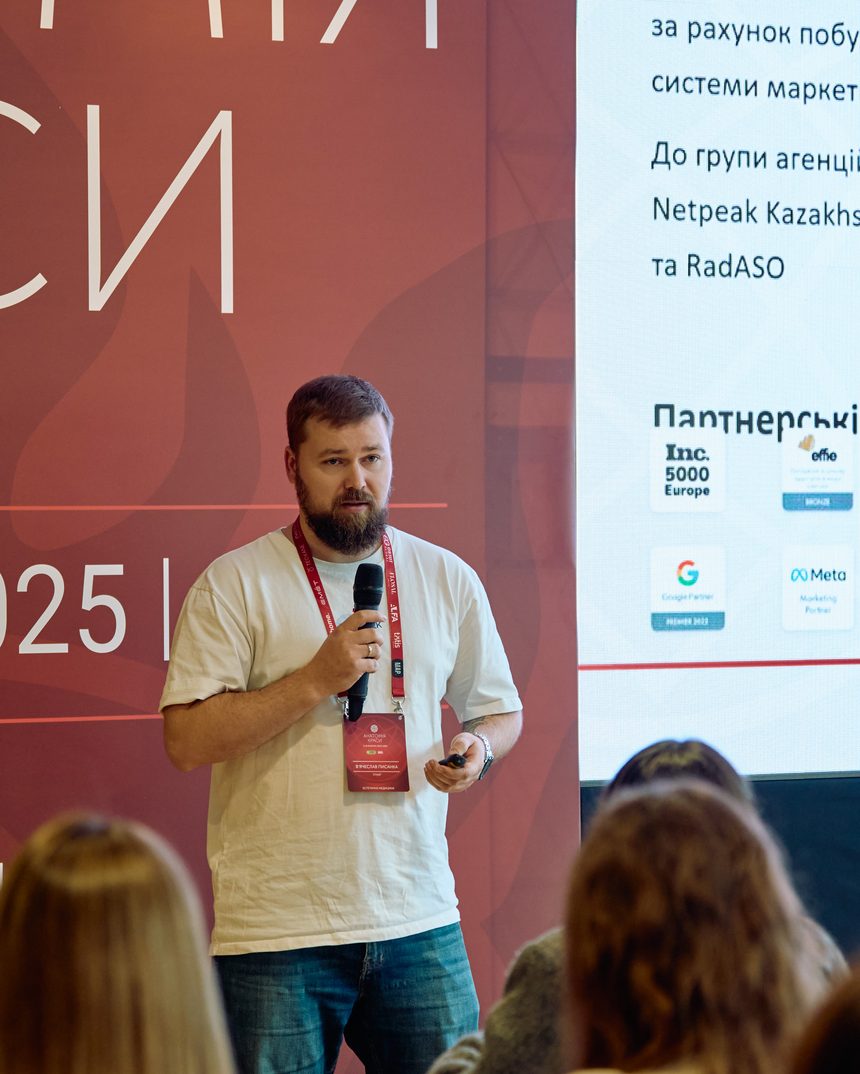
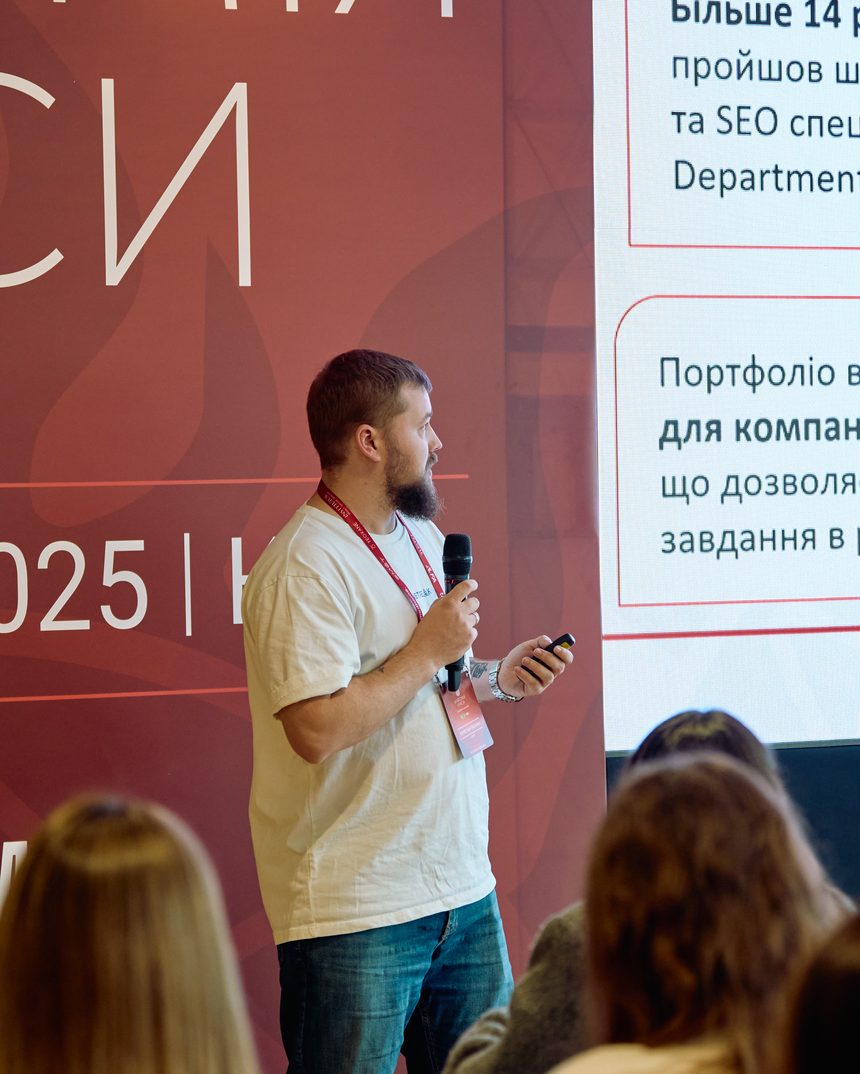
I speak at industry conferences and meetups, teach on courses, and comment for business media — mostly on reputation in search, reviews in e-commerce, and how a brand looks inside AI answers.

Find me elsewhere
Profiles marked with a dotted border are not set up yet. For entity building, each of them needs to link back to this site — otherwise the loop of corroboration never closes.
Frequently asked
+Who is Vyacheslav Pysanka?
I am a Ukrainian specialist in search engine reputation management (SERM) and SEO, Head of SERM Department at Netpeak Ukraine. I live in Kyiv and have been in digital for over 14 years.
+How is SERM different from SEO?
SEO answers whether you will be found. SERM answers what people see once they find you. You can have excellent SEO and a disastrous brand SERP: the site ranking well for commercial queries while three negative results sit beside it under your company name.
+How much experience do you have?
More than 14 years. I started in 2010 with my own online magazine, moved into SEO in 2014, began leading teams in 2022, and have headed the SERM department at Netpeak since 2024. Full timeline.
+Which markets do you work with?
Ukraine, the United States and the European Union. I have worked agency-side at iProspect and Netpeak, and product-side at Develux and Kovalska.
+Can negative results be removed from Google?
Some can. Defamation, personal data and copyright infringement can be taken down through the platform or through Google's own procedures. The rest cannot be removed, only pushed down by stronger, more relevant results. First movement shows at six to ten weeks; a durable result at four to eight months. Anyone promising removal "within a week" is either uninformed or dishonest.